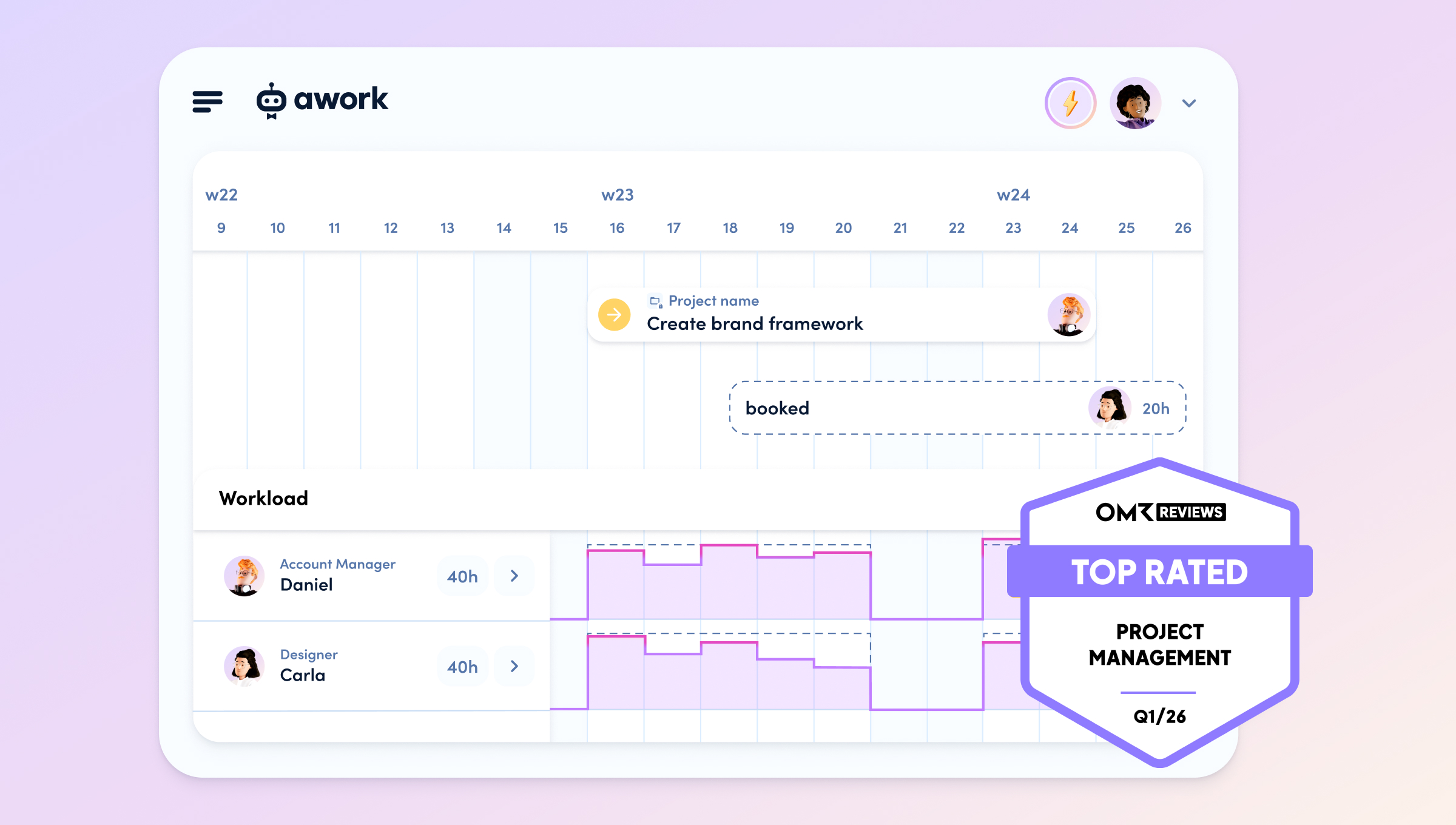
Resource management for agencies and creative teams means one thing above all: planning the valuable time of employees so that deadlines are met without anyone burning out. It is the balancing act between economic utilisation and a healthy team climate. Instead of rigid management of people, today it is about agile coordination, transparency, and the question: Who has time for which project and when? In this article, you will learn how to successfully integrate resource planning into your daily agency routine.
Definition: What is resource management?
Resource management involves the efficient planning, allocation, and control of all assets necessary to achieve project goals. In the context of knowledge work and agencies, the focus is primarily on human resources (time, skills, availability) and less on physical materials. The goal is to make optimal use of existing capacities, minimise idle time, and avoid overload.
It answers the central questions:
- Which skills are required for the project?
- Who is available during the desired period?
- How does the project budget compare to actual working hours?
Why resource management is essential for agencies to survive
In project-driven teams, time is literally money. Poor resource management leads directly to "zombie projects" that eat up budgets, and to frustrated teams. Here are the biggest levers:
- Avoidance of burnout: Through realistic capacity planning, you see bottlenecks before they arise and protect your team from permanent overload.
- Higher profitability: When you know exactly who is working on what, you can reduce unproductive time and maximise billable hours.
- Planning reliability: Clients receive reliable timings because your commitments are based on real availability data and not on gut feeling.
[.b-related-article]The best resource planning tools[.b-related-article]
The three pillars of resource management
A holistic system stands on three legs that are closely interlinked.
1. Capacity planning
This is about strategic foresight. How much manpower is actually available to your agency in the coming weeks or months? Capacity planning takes into account holidays, public holidays, part-time models, and base loads (such as internal meetings) to determine the "net working time".
2. Resource allocation (Scheduling)
This is the operational "matching": You assign specific tasks or projects to the appropriate team members. Not only temporal availability but also skills play a role here. A modern tool for team scheduling helps you keep track via drag & drop.
3. Resource control & controlling
The plan is one thing, reality is another. By comparing planned time with actually recorded project time (time tracking), you can see whether your calculation is working out or whether you need to take corrective action.
Software support: No more Excel wallpapers
Many agencies start with huge Excel sheets but quickly reach the limits of complexity. Modern software solutions automate this process and create transparency for everyone. What you should look for when choosing a tool:
- Visual planning: A graphical timeline shows you gaps and overlaps at a glance.
- Integrated time tracking: Planned and actual data should be in the same system to enable direct comparisons.
- Calendar integration: The tool should know when employees have calendar appointments to avoid double bookings.
- Permissions management: Not everyone needs to see everything – but everyone should know what's coming up next.
3 best practices for getting started
- The 80% rule: Never schedule 100% of working time. Illness, spontaneous calls, or technical problems always happen. Plan with approx. 80% availability to have a buffer for the unexpected.
- Build a skill database: Document not just "who" but also "what". Who can do motion design? Who speaks fluent French? This way, you will find the right "match" for new projects faster.
- Regular coordination: A tool does not replace conversation. Use the resource overview in the weekly team meeting to distribute peak loads together.
FAQ
How does resource management differ from project management?
Project management focuses on achieving a specific goal (budget, time, quality) of a single undertaking. Resource management is the overarching process that ensures sufficient personnel and assets are available for all ongoing projects.
What to do if resources are overbooked?
Prioritisation is key. Check which tasks can be postponed (slack) or whether the project portfolio needs to be adjusted. Often, an open conversation with the client about a deadline postponement also helps before quality suffers from overload.
Is resource management worth it for small teams too?
Absolutely. Especially in small teams, the absence of a single person has a massive impact. A transparent plan helps even more to recognise risks early and, for example, bring in freelancers in good time.
[.no-toc]Conclusion[.no-toc]
Resource management is not a bureaucratic monster, but the operating system of healthy agencies. It creates the basis for reliable commitments and satisfied employees. Switching from static tables to dynamic planning allows you to react flexibly to client requests without burning out the team.
Want to see how easy visual resource planning can be? Discover team scheduling in awork and bring transparency to your projects.