Success factors determine whether a project ends profitably or exceeds the budget. They are the levers you can adjust to ensure competitiveness, growth, and the satisfaction of your team. Especially for agencies and project-oriented teams, it is essential not to leave these factors to chance.
In this glossary entry, you will learn which specific internal and external levers you can set in motion to bring your projects across the finish line "on time" and "on budget".
Definition: What are success factors?
Success factors (Key Success Factors) are those aspects and competences that are significantly responsible for a company or a project achieving its goals. They form the foundation for a strong market position and long-term profitability.
A fundamental distinction is made between:
- Internal factors (things you can control directly, such as processes or tools)
- External factors (things you must react to, such as market trends or client requirements)
The different types of success factors
To make targeted optimisations, it is worth looking at the three main categories. These often contain untapped potential for more efficient workflows.
1. Internal success factors
These factors describe the strengths within your organisation. For agencies, these are often the "hard facts" of operational work.
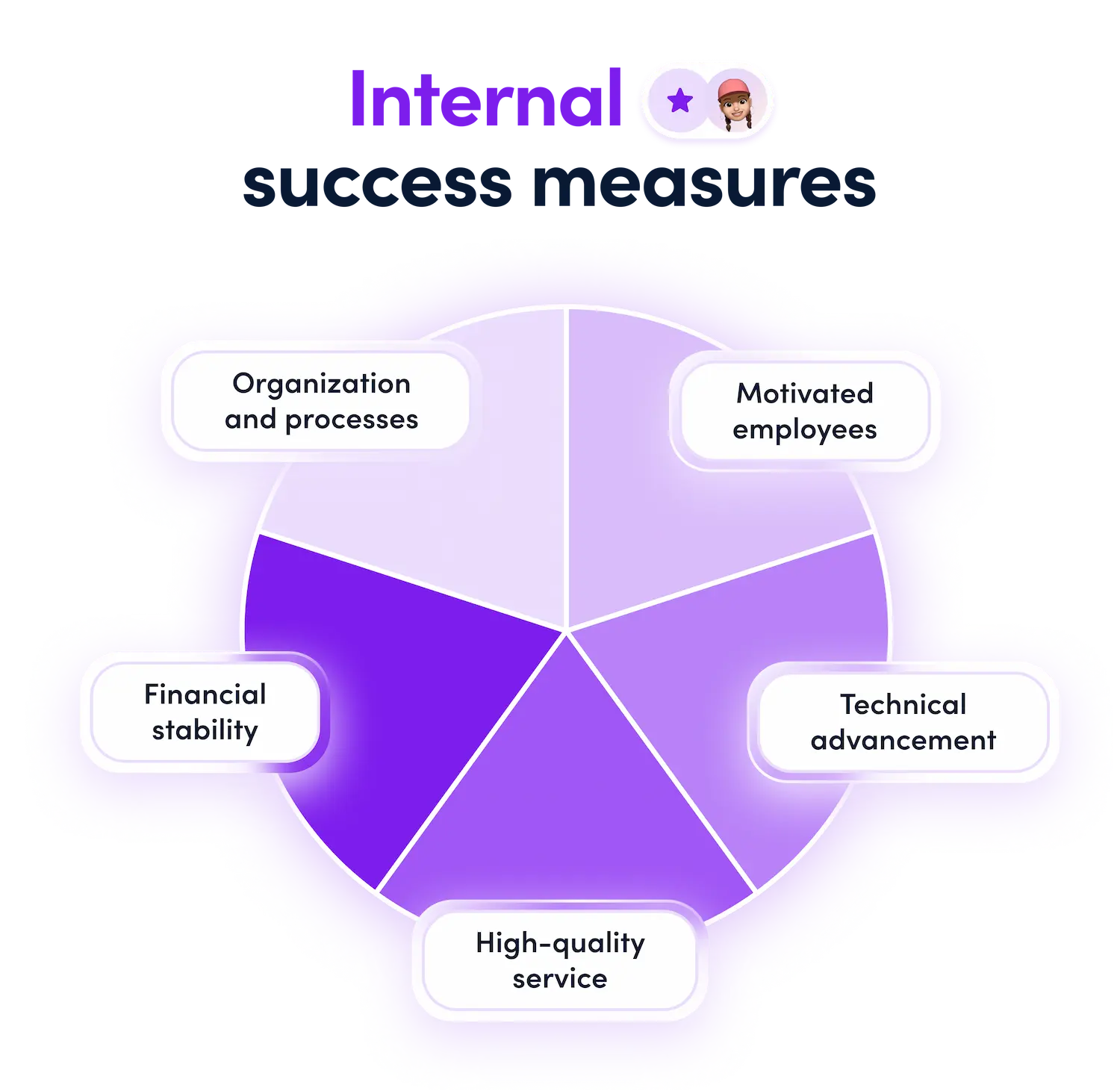
Important internal levers include:
- Efficient processes: How smoothly does the workflow run from the initial enquiry to invoicing?
- Resource planning: Forward-looking resource planning prevents overload and idle time.
- Qualified employees: The know-how and motivation within the team are your most important assets.
- Technological basis: Do you use modern tools for collaboration and time tracking?
- Financial stability: Liquidity and solid cost calculation secure your freedom to act.
🧩 Strengthen internal success factors – with awork
Efficient processes, motivated teams, and clear workflows are central success factors – and this is exactly where awork comes in. With smart planning, transparent task distribution, and intuitive design, awork ensures that your team works focused, organised, and productively.
💡 This is how strong teamwork becomes a real competitive advantage.
[.b-button-primary]Discover awork[.b-button-primary]
2. External success factors
These influencing variables come from the outside. You cannot control them directly, but you must observe them closely and adjust your strategy accordingly.
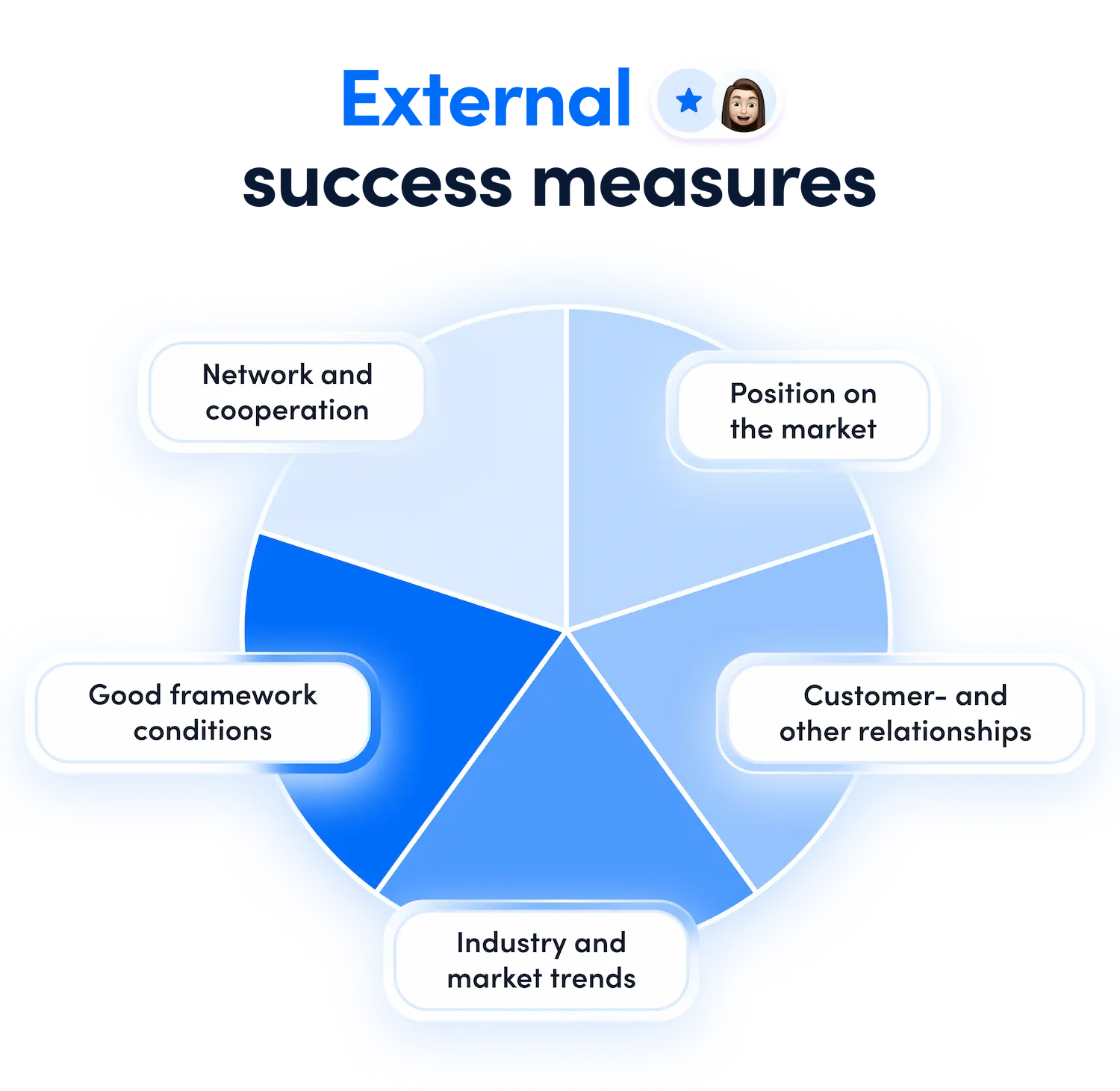
These include:
- Market position & competition: How do you differentiate yourself from other agencies?
- Stakeholder relationships: How good is your connection to stakeholders such as clients and partners?
- Market trends: Which new technologies (e.g. AI) are changing the industry?
- Legal framework: Laws and compliance requirements (e.g. GDPR).
3. Strategic success factors
This is about long-term orientation. An agency without a clear vision quickly loses itself in the minutiae of day-to-day business.
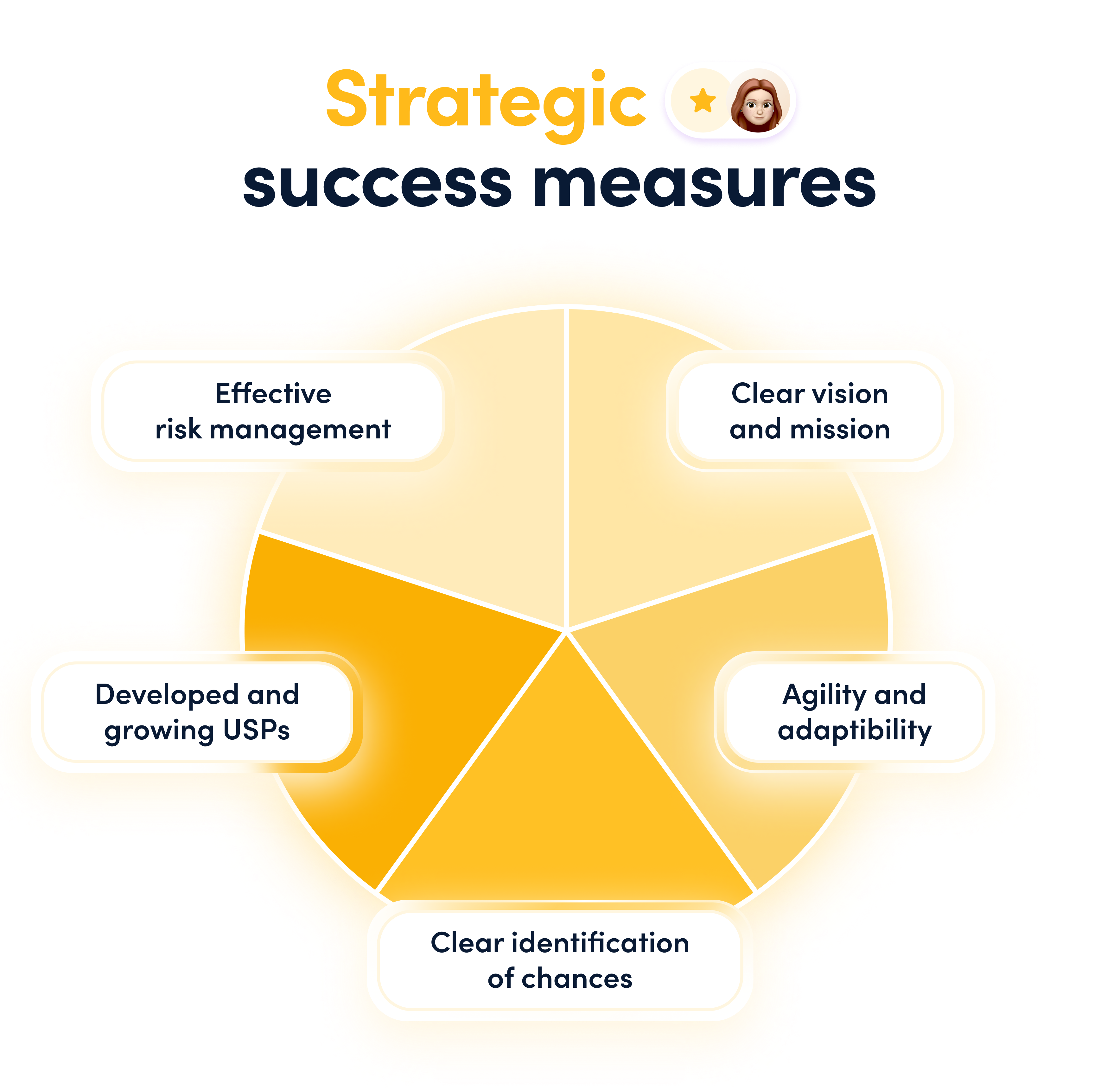
Decisive factors are:
- Vision & Mission: Does everyone on the team know where the journey is heading?
- Agility: How quickly can you react to changes?
- Innovation culture: Do you encourage new ideas or just manage the status quo?
- Risk management: Are potential problems identified early on?
How can companies identify and optimise their success factors?
[.toc-name]Identify & optimise success factors[.toc-name]
Many teams work hard, but in the wrong places. To truly leverage your success factors, you need a structured process:
- Inventory (Status Quo): Honestly analyse the current situation. Use methods like SWOT analysis to contrast internal strengths and external opportunities.
- Prioritisation: Not everything is equally important. Focus on the factors with the greatest leverage (Pareto principle). Often, optimising resource utilisation yields more than fine-tuning the folder structure.
- Adjust project management: Integrate the findings into your daily routine. Ensure clear role distributions (see roles in project management) and transparent communication.
- Measurability & Adjustment: Define KPIs (Key Performance Indicators) to measure progress. Conduct regular retrospectives to check whether the measures are working.
FAQs on success factors
Why are success factors so important for agencies?
They are the compass in project-based work. Since agencies often juggle tight budgets and deadlines, identifying success factors (such as billability or client satisfaction) helps to deploy resources specifically where they create the most value. This prevents guesswork and secures the margin.
What is the difference between success factors and KPIs?
A success factor is the cause or lever (e.g. "High employee satisfaction"), while the KPI (Key Performance Indicator) is the metric that indicates success (e.g. "Fluctuation rate below 5%"). KPIs make the status of success factors visible.
What role does the triple constraint play?
The triple constraint (or magic triangle) of project management defines the three competing success factors: Time, Cost, and Quality. A change at one corner (e.g. budget cut) inevitably influences the others (e.g. quality or schedule). Successful project managers actively balance these factors.
Conclusion
Success factors are not an abstract theoretical construct, but your daily tool for better projects. Those who have a grip on their internal processes and recognise external changes early on act instead of merely reacting. Use modern tools and an open feedback culture to continuously sharpen these factors. This turns a "hopefully this works" project into a predictable success.